
SAFE SPACES
This FORMAS project asks; Who feels safe in the city? Who gets to decide? And who gets left outside? Can culture make a city safer? And what does safety actually mean when we don’t all feel safe in the same places?
PROJECT CONTACT USProject information
Project: TRYGGA RUM – Building Convivial Safety in Post-Industrial Urban Spaces
Swedish title: Att bygga rättvis och inkluderande trygghet i postindustriella stadsmiljöer
Period: September 2026 – August 2029
Location: Malmö’s Kulturljudzon, Sofielund
Project coordinator: Malmö University
Partners: NGBG Kulturförening, Malmö University, Malmö stad, Trans Europe Halles and police representatives
Funding: Formas – Safe Spaces / Trygga rum
TRYGGA RUM
Who feels safe in the city? Who gets to decide? And who gets left outside?
Can culture make a city safer? And what does safety actually mean when we don’t all feel safe in the same places?
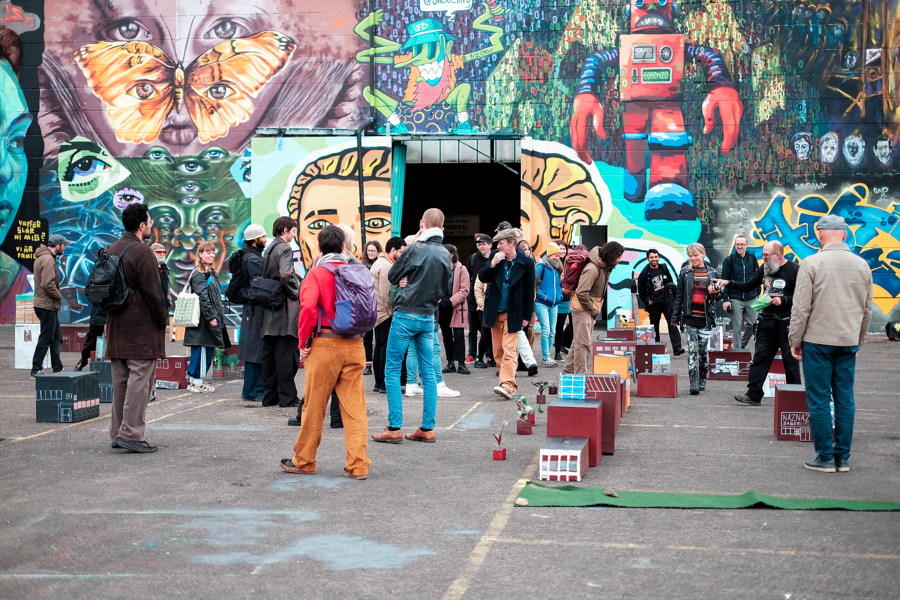
Malmö’s Kulturljudzon is an urban experiment. Former factories and industrial buildings have become home to music venues, art studios, cultural associations, sports clubs and community spaces. People from different backgrounds share the same streets, sometimes working together, sometimes disagreeing about how the neighbourhood should develop.
But whose interests are being served by this transformation? Who has access to these spaces? And can cultural activities help create a city where more people feel welcome, included and safe?
These are some of the questions behind TRYGGA RUM – Building Convivial Safety in Post-Industrial Urban Spaces, a three-year research and development project bringing together NGBG Kulturförening, Malmö University, Malmö stad, Trans Europe Halles and representatives of the police.
The project runs from September 2026 to August 2029 and is supported by Formas.
Safety for whom?
Safety means different things to different people.
For some, a safe neighbourhood means more police, better lighting and fewer disturbances. For others, safety means having somewhere to meet friends, express themselves, organise activities or simply exist without being questioned or excluded.
A lively street full of music and people might feel welcoming to one person and intimidating to another. A building that appears abandoned to an outsider might contain an important cultural community. And measures intended to make an area safer can sometimes make its most vulnerable residents feel less secure.
TRYGGA RUM starts from the idea that these different experiences deserve to be heard.
The project explores a concept called Convivial Safety: the possibility of creating safety through shared spaces, cultural encounters, mutual respect and cooperation between people who do not necessarily agree with one another.
We don’t have to agree about everything to share a city.
The city is already here
Urban development often begins with a plan for what a neighbourhood should become.
But neighbourhoods are not empty spaces waiting to be developed. They are already full of people, relationships, memories, activities and informal networks.
Norra Grängesbergsgatan is a particularly interesting example. Over several decades, its industrial buildings have attracted an extraordinary mixture of businesses, cultural organisations, religious communities, artists and independent initiatives.
Much of this cultural infrastructure developed organically, without a master plan.
The creation of Malmö’s Kulturljudzon has brought new recognition to the area’s cultural significance. But it has also raised difficult questions about commercialisation, rising rents, access to premises and who gets to participate in decisions about the neighbourhood’s future.
TRYGGA RUM will investigate how the existing cultural life of the area can contribute to its development, rather than simply making way for something new.
From research to reality
Rather than studying the neighbourhood from a distance, TRYGGA RUM will use the Kulturljudzon itself as an Urban Living Lab.
NGBG and Malmö University will jointly organise at least three experimental cultural interventions in former industrial buildings.
Through performances, exhibitions, workshops and other collaborative activities, we will explore how these buildings can become welcoming, accessible spaces where different communities can meet.
The activities will be developed together with local organisations and participants, with particular attention to people and cultural initiatives that are often excluded from conventional urban planning processes.
Each experiment will be documented and evaluated. What worked? Who participated? Who didn’t? Did the activities create new relationships, opportunities or conflicts? And what can we learn about how cultural spaces should be organised and managed?
The results will inform further experiments and practical recommendations for cultural organisations, municipalities and the police.
Culture is not just entertainment
At NGBG, we believe that culture is part of a city’s essential social infrastructure.
A rehearsal room, an independent gallery, a community workshop or a temporary festival can be much more than somewhere to enjoy music or art.
These places create opportunities for people to meet across social and cultural boundaries. They provide room for experimentation, self-expression and collective action. They allow communities to develop their own identities and participate in shaping their surroundings.
But such spaces are often fragile. Short-term leases, increasing property values, commercial pressures and changing political priorities can threaten their existence.
Through TRYGGA RUM, we want to explore how these spaces can be supported and managed in ways that benefit the communities using them.
The question is not simply how culture can make an area more attractive. It is how cultural infrastructure can help make the city more inclusive, democratic and safe.
An experiment in cooperation
One of the project’s most interesting challenges is bringing together organisations that have very different responsibilities, experiences and perspectives.
Cultural associations, municipal planners and police officers do not always agree about what makes a neighbourhood safe.
Nor should we expect them to.
TRYGGA RUM aims to create opportunities for constructive disagreement, shared learning and practical cooperation.
NGBG’s particular responsibility is to ensure that independent cultural organisations and marginalised communities have a meaningful role in this process.
We will help organise the cultural experiments, involve local participants, document what happens and share the results with cultural networks in Malmö and beyond.
The project will also develop practical tools, recommendations and educational materials that can be used in other cities facing similar challenges.
What kind of city do we want?
The future of the Kulturljudzon is still being negotiated.
Will it become a neighbourhood where independent cultural organisations, industry, businesses and diverse communities can continue to coexist?
Or will the cultural activities that made the area attractive eventually be displaced by the very development they helped inspire?
TRYGGA RUM cannot answer these questions in advance.
But it offers an opportunity to experiment with alternatives, bring different perspectives into the conversation and develop practical approaches to managing the spaces we share.
Because a safe city isn’t necessarily a quiet city. And a successful city isn’t necessarily one where everyone agrees.
Perhaps the most important question is whether we can create enough room for everyone to participate.